
Too long, didn’t read:
Sustainability has become one of agriculture’s most important conversations, but industries often define it differently.
What works as a sustainability benchmark in one production system may not make sense in another.
Understanding sustainability starts with understanding what each industry is actually trying to sustain.
One Word, Many Meanings
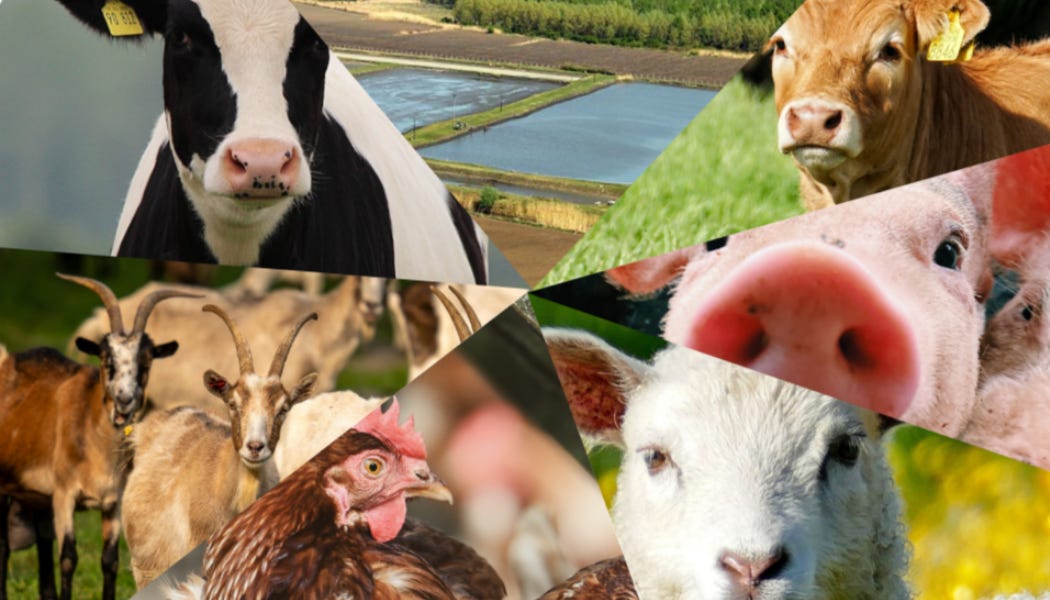
Few words carry more weight in agriculture today than sustainability. Food companies are setting sustainability goals, retailers are requesting sustainability data, and investors are paying closer attention to environmental and social performance. Across the food system, sustainability has become one of the defining conversations shaping agriculture’s future. Yet for a term used so frequently, sustainability remains surprisingly difficult to define, and one definition all industries can share remains elusive. Most public discussions treat it as though it were a single destination, which is understandable. Yet, animal agriculture tells a much different story.
The deeper one dives into the industries responsible for producing animal protein, the harder it becomes to find a single definition that captures every challenge and every priority. Sustainability is often discussed as a one-size-fits-all definition, but in reality, it’s influenced by geography, production methods, resource demands, economics, and the realities of individual industries. This doesn’t mean sustainability lacks meaning, and if anything, it highlights how complex the concept has become. Because of this complexity, different industries often address sustainability from very different starting points.
Sustainability Depends on What You're Trying to Sustain
Sustainability is often described as meeting today’s needs without compromising the ability of future generations to meet theirs. It is a simple definition, but applying it becomes much more complicated in practice. To do so, it is first necessary to ask what exactly is being sustained. Food production, natural resources, rural communities, producer profitability, and consumer trust are all common priorities within animal agriculture, and in many cases, the answer is all of the above.
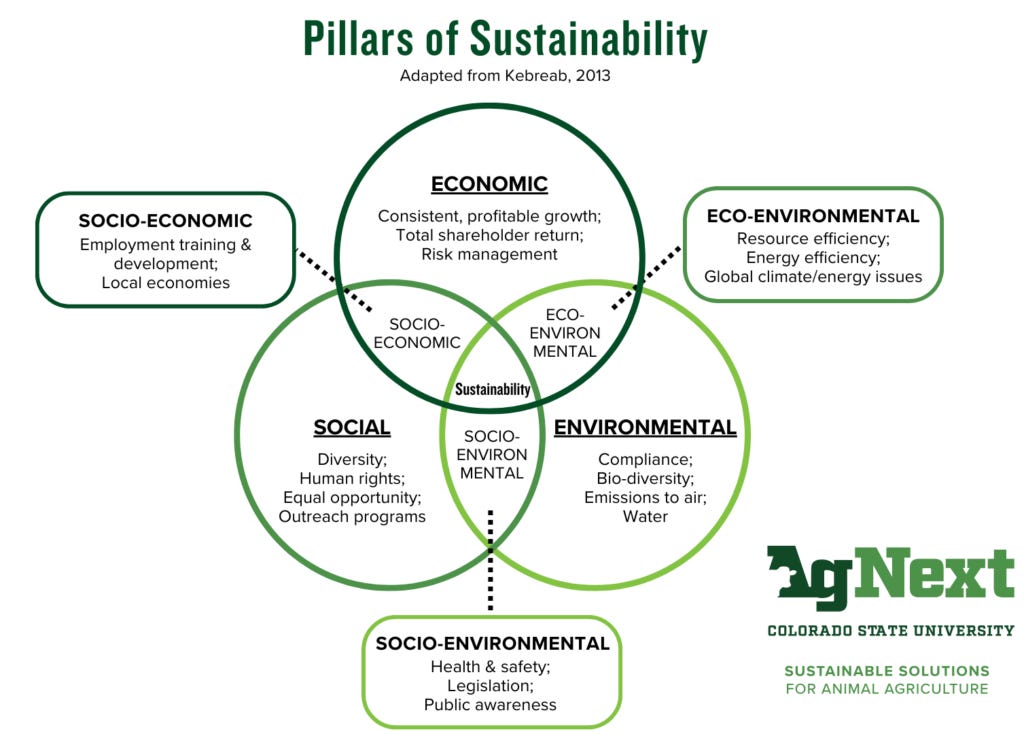
Balancing these priorities can be challenging, as they often conflict or vary in importance depending on the production system. As a result, sustainability does not look the same across every sector of animal agriculture, with each industry defining and pursuing it in ways that reflect its unique production systems and priorities.
Agriculture occupies a unique position in this discussion because it depends on natural resources while simultaneously managing them. Producers must think about environmental outcomes, but they must also remain productive enough to meet demand, resilient enough to withstand changing markets, and most importantly, profitable enough to remain in business. This balancing act is often overlooked in broader sustainability conversations where the public discussion frequently focuses strictly on outcomes. Meanwhile, producers must focus on outcomes and feasibility. A solution that appears sustainable on paper must also function in the real world. That reality helps explain why sustainability looks so different from one industry to the next.
Different Industries, Different Challenges
The clearest evidence of sustainability’s complexity can be found by examining how individual animal agriculture sectors define and pursue it. While the broader goal is shared, the challenges each industry faces and the strategies used to address them are often quite different.
For the beef industry, sustainability has become closely tied to stewardship and the long-term management of natural resources. While caring for grazing lands and livestock has always been central to cattle production, the industry’s sustainability efforts have increasingly focused on documenting measurable improvements in environmental performance while maintaining productive and economically viable operations.
The dairy industry has taken a different path. Rather than emphasizing a single environmental outcome, dairy has become one of the most coordinated sectors in agriculture, investing heavily in benchmarking, environmental measurement, and industry-wide collaboration. Sustainability has become as much about demonstrating progress as it is about achieving it.
Sheep and goat producers offer another perspective. Their sustainability efforts are often rooted in managed grazing and land stewardship, with production systems that support vegetation management, control of invasive species, and the productive use of landscapes that may be less suitable for other forms of agriculture.
The poultry and swine industries have built much of their sustainability progress on efficiency. Decades of improvements in genetics, nutrition, animal health, and production management have allowed producers to generate more food while using fewer resources. For swine producers, nutrient management and the productive use of manure have become central sustainability priorities, while poultry has paired production efficiency with growing attention to animal welfare and responsible management practices.
Aquaculture presents perhaps the most unique perspective. Unlike terrestrial livestock industries, aquaculture production is more directly connected to surrounding aquatic ecosystems, making environmental stewardship even more inseparable from production itself. Water quality, responsible feed sourcing, biosecurity, traceability, and certification programs all play important roles in demonstrating that seafood can be produced while protecting the environments on which the industry depends.
These examples illustrate an important point. Although every sector is pursuing sustainability, they are often solving different problems. The challenge is not determining which approach is most sustainable, but recognizing that each industry must balance environmental, economic, and social priorities within the realities of its own production system.
The Pressure to Find One Standard
Despite agriculture’s diversity, there is growing pressure from consumer packaged goods companies, nongovernmental organizations, and even some within agriculture to simplify sustainability into a set of common benchmarks. Their motivation is understandable. Consumers want transparency, retailers want consistency, food companies want measurable goals, and Wall Street analysts want comparable data and a simple story to tell investors. The result has been a proliferation of frameworks and certifications, and, in many ways, this represents significant progress. After all, better management and more consistent reporting can increase transparency and drive continuous improvement.
But standardization becomes much more complicated when industries operate under fundamentally different conditions. Agriculture isn’t a single production system. Rather, it’s a collection of highly specialized industries, each interacting with different resources, biological systems, environmental conditions, and market forces. That complexity doesn’t disappear simply because we create a common reporting framework. Ironically, these frameworks often make it more apparent.
The Risk of Oversimplification
One of the challenges facing modern sustainability discussions is the temptation to reduce complex systems into simple metrics. Metrics help measure progress, compare performance, and communicate results. However, metrics can also create the impression that sustainability can be distilled into a single scorecard, and agriculture rarely works that way.
A sustainability indicator that provides meaningful insight within one production system may offer little context in another. A practice that generates measurable improvements in one industry may be impractical, unnecessary, or even counterproductive in a different setting. This is not a weakness of sustainability measurement; rather, it reflects the complexity of agriculture itself. The reality is that sustainability often involves tradeoffs. Improving one outcome may affect another, and environmental goals must be considered alongside economic realities. Production decisions that work well in one region may not be suitable in another.
As conversations around sustainability continue to evolve, preserving this context becomes increasingly important. Without it, there’s a risk that agricultural systems become evaluated based on what’s easiest to measure rather than what’s most meaningful to improve.
What the Industries Actually Share
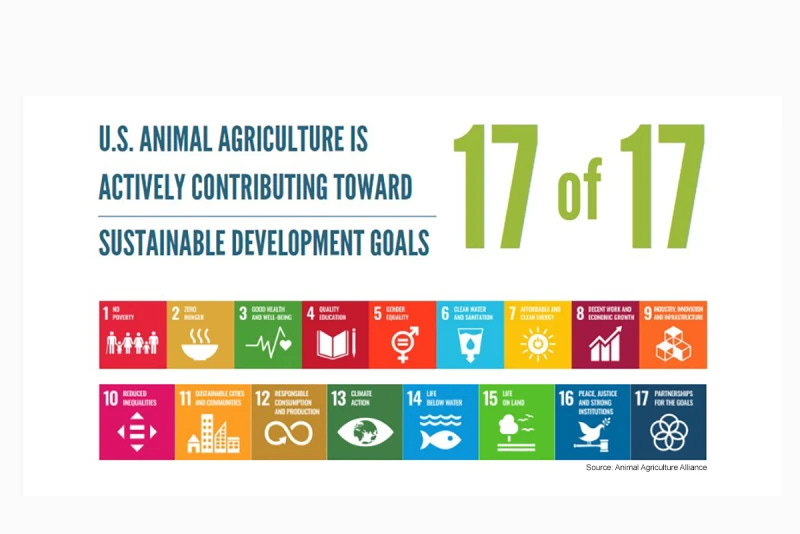
For all the differences that exist across animal agriculture, there are also important similarities. Every sector is investing in research, innovation, and continuous improvement while searching for ways to use resources more efficiently, strengthen long-term viability, and respond to changing expectations from consumers and supply chain partners. Perhaps most importantly, every industry is attempting to answer the same fundamental question of how to continue to produce food while preserving the resources that make future production possible (all while keeping consumers satisfied).
The answer may look different depending on whether the conversation involves grazing lands, dairy operations, poultry houses, pork production, or aquaculture facilities. Yet the broader objective remains remarkably similar, and this fact is often lost in public discussions that focus exclusively on individual metrics or isolated outcomes. Industries may disagree on methods, priorities, or measurements, but they’re largely working toward the same long-term goal of ensuring that agriculture remains capable of meeting future demand. In that sense, sustainability may be less about reaching a destination and more about maintaining the capacity to adapt and improve over time.
Looking Beyond a Single Definition
Sustainability will likely remain one of the defining conversations shaping the future of agriculture. As consumer expectations evolve and supply chains place greater emphasis on transparency and accountability, the pressure to measure and communicate sustainability performance will continue to grow. That isn’t necessarily a challenge agriculture should avoid. Rather, it’s an opportunity to better understand how different industries are approaching similar objectives through different pathways.
The lesson from animal agriculture is that sustainability can’t always be reduced to a single definition. Different industries face different challenges and rely on different resources. They operate within different environments and respond to different market forces. It shouldn’t be surprising that their sustainability priorities reflect those realities.
The future of sustainable agriculture may depend less on finding a universal standard and more on recognizing that meaningful progress can take many forms. Because while the routes may differ, the destination remains the same: producing food responsibly while preserving the resources and systems needed to support future generations. Sustainability isn’t a one-size-fits-all concept, and understanding that complexity isn’t a barrier to progress. Rather, it’s the foundation for it.
Interested in learning more? Our latest white paper, “Sustainability in Animal Agriculture,” takes a deeper look at how major animal agriculture sectors are approaching sustainability and what those differences reveal about the future of food production.
Recent Articles
Agriculture has too much at stake to sit on the political sidelines in Kansas Farmer
Fertilizer crisis is a wake-up call for farmers in Kansas Farmer
Sorghum: An ancient grain turned essential ingredient in Kansas Farmer
From the field to the future: How AI can transform farming in Kansas Farmer
Sustainability in Animal Agriculture on seroag.com
If you haven’t already, check out our previous newsletters.
About Serō Ag Strategies
At Serō Ag Strategies, we bridge farmers and supply chain partners by transforming complex agricultural data and policy into actionable insights. We also work to create and grow markets for commodity crops by aligning production with evolving demand, policy shifts, and sustainability goals. Combining multinational expertise with the personal touch of boutique consulting, we specialize in economic and sustainability analysis that drives strategic innovation.
Click here to learn more about Serō Ag Strategies.