

Too long, didn’t read:
A century of better irrigation technology made water easier to use, but the incentive to pump never changed.
In Kansas, a farmer-proposed cap plus better management cut aquifer depletion without hurting incomes, meaning limits made savings stick.
The next step requires systems like a water budget, data that drives decisions, and a reason to leave water in the ground
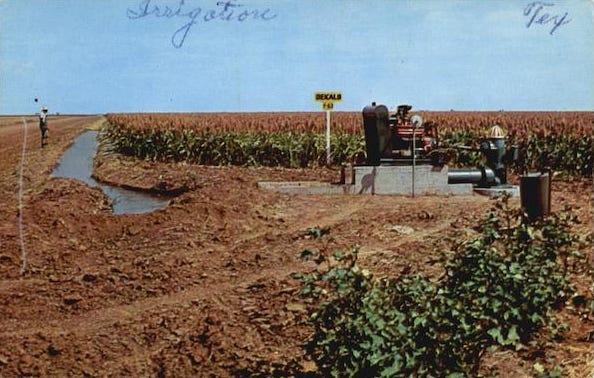
What does an English economist have to do with the Ogallala?
In 1865, an English economist named William Stanley Jevons argued that technology making a resource more efficient doesn’t necessarily reduce how much of it we use. Britain’s steam engines kept improving, allowing each ton of coal to do more work. Logic said the country should burn less coal, but it burned more. Cheaper work found more uses. This is called the Jevons Paradox.
Every generation of irrigation equipment on the High Plains has been sold as a way to grow more crops with less water. Each one delivered on that promise, but over that time, the water table kept falling. A farmer with a better system isn’t doing anything wrong. He’s just responding to a signal that says water is cheap and crops are valuable, and a better tool makes it easier to capitalize on that.
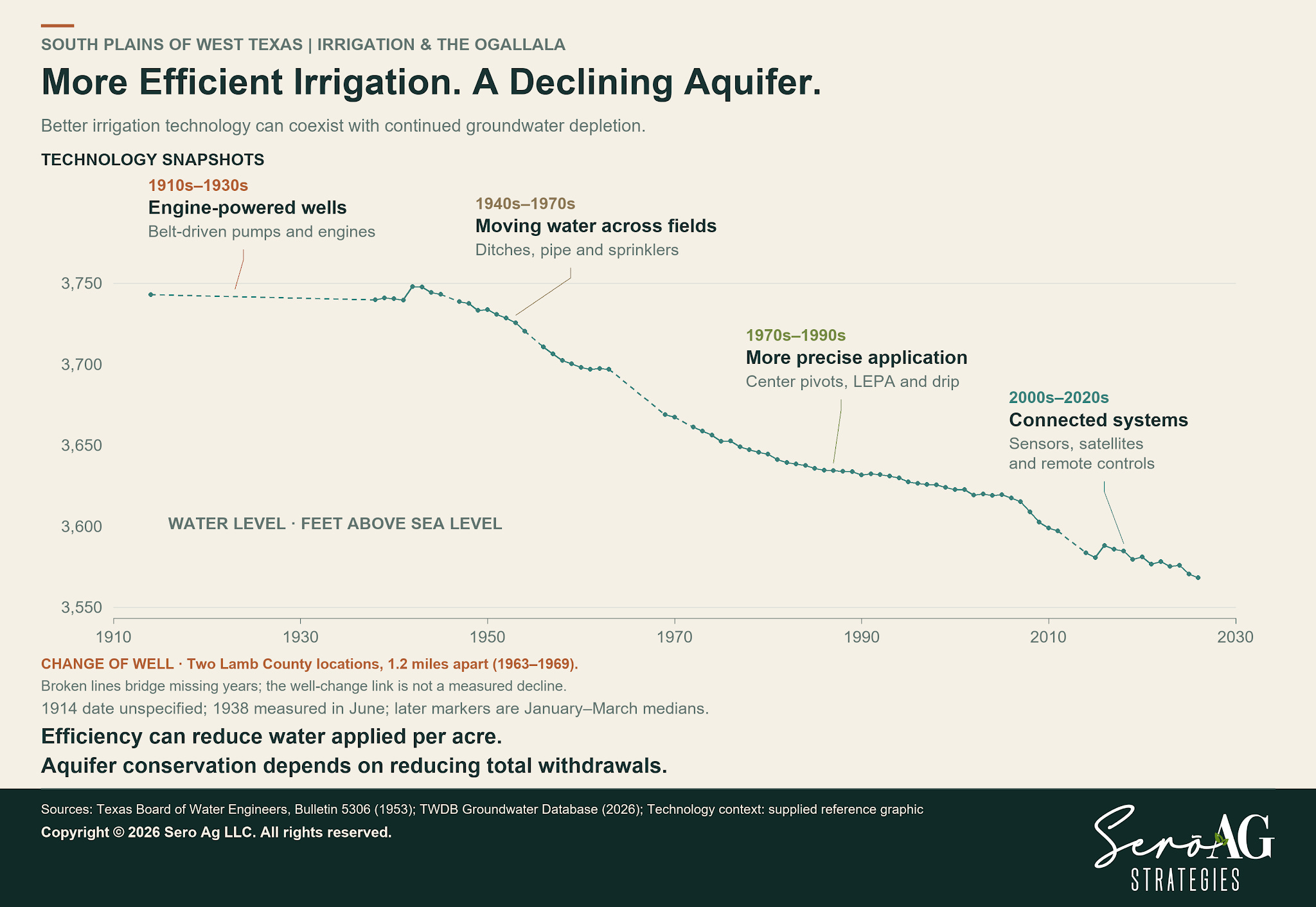
A century of making water easier to use
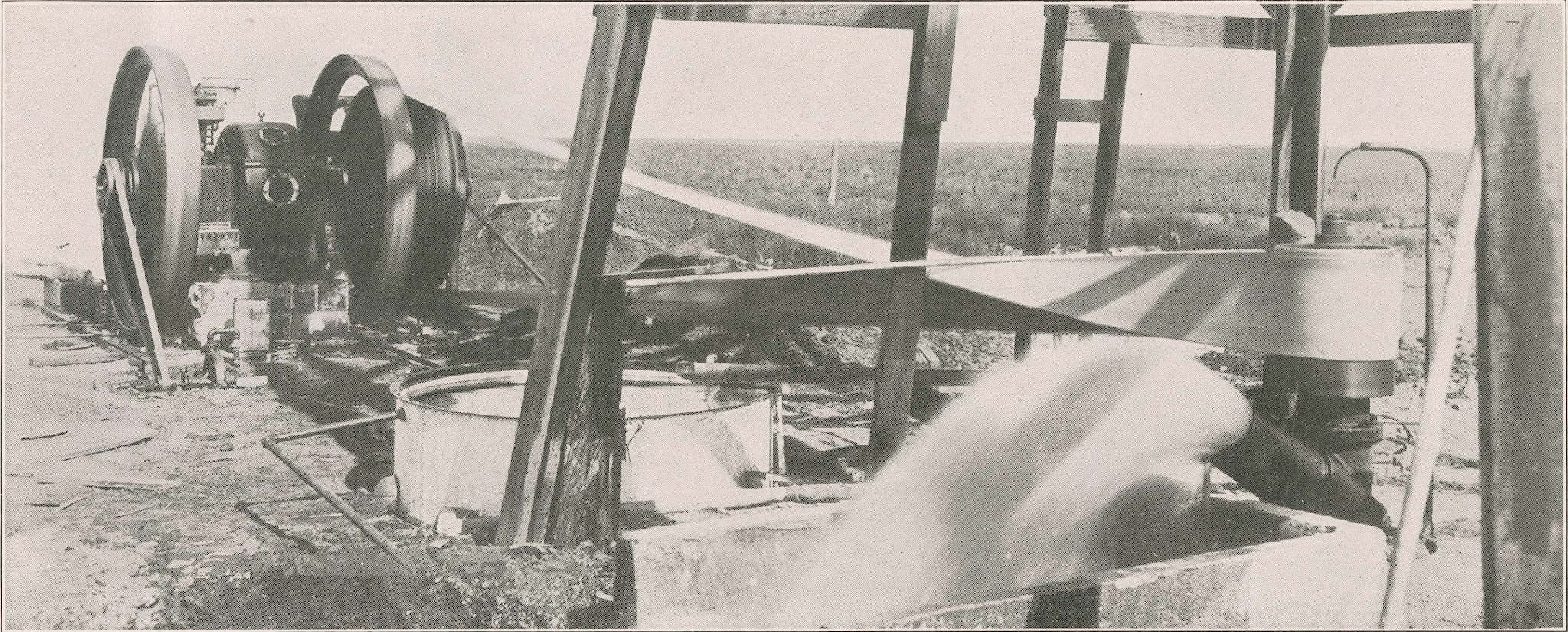
Irrigation on the Texas High Plains is about 115 years old. The first successful large pumping plant we can find documented went in near Hereford in 1910. The Hereford plant used a vertical centrifugal pump driven from a steam traction engine through a long belt. The belt stretched and slipped, needing constant attention. By the early 1930s, farmers were adapting used automobile engines to run turbine pumps.
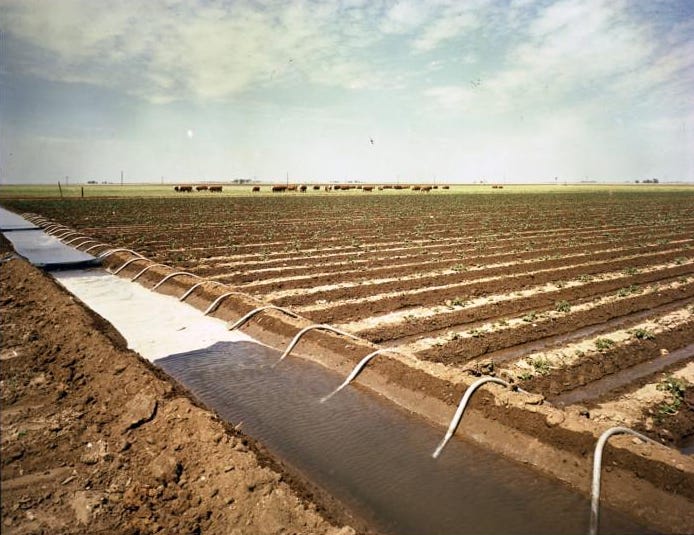
In the early days, water moved down open ditches, and farmers cut the ditch banks or set siphon tubes to feed the rows. A lot of it never reached the crop, instead seeping, evaporating, or running off. Underground concrete pipe fixed that. In 1944, a farm north of Littlefield installed concrete pipe, and a 1958 survey reported 1954 as a banner year, with installation of concrete pipe rapidly accelerating. Risers, bonnets, and standpipes helped concrete replace the ditch right up until final distribution to the crop, largely eliminating the prior seepage issues. For the first time, wells could be drilled on field low points and tied together, radically opening up the landscape to drilling. Aluminum gated pipe came next, and by 1958, about half of irrigated farms on the Texas High Plains had some form of closed distribution.
Electric pumping had existed since about 1911, but it took rural electrification to make it common, and electric motors began replacing engines as power reached the wells. While this meant less wasted energy on smaller wells where an engine wasn’t required, it also meant small wells that previously wouldn’t have been completed were suddenly able to be used.
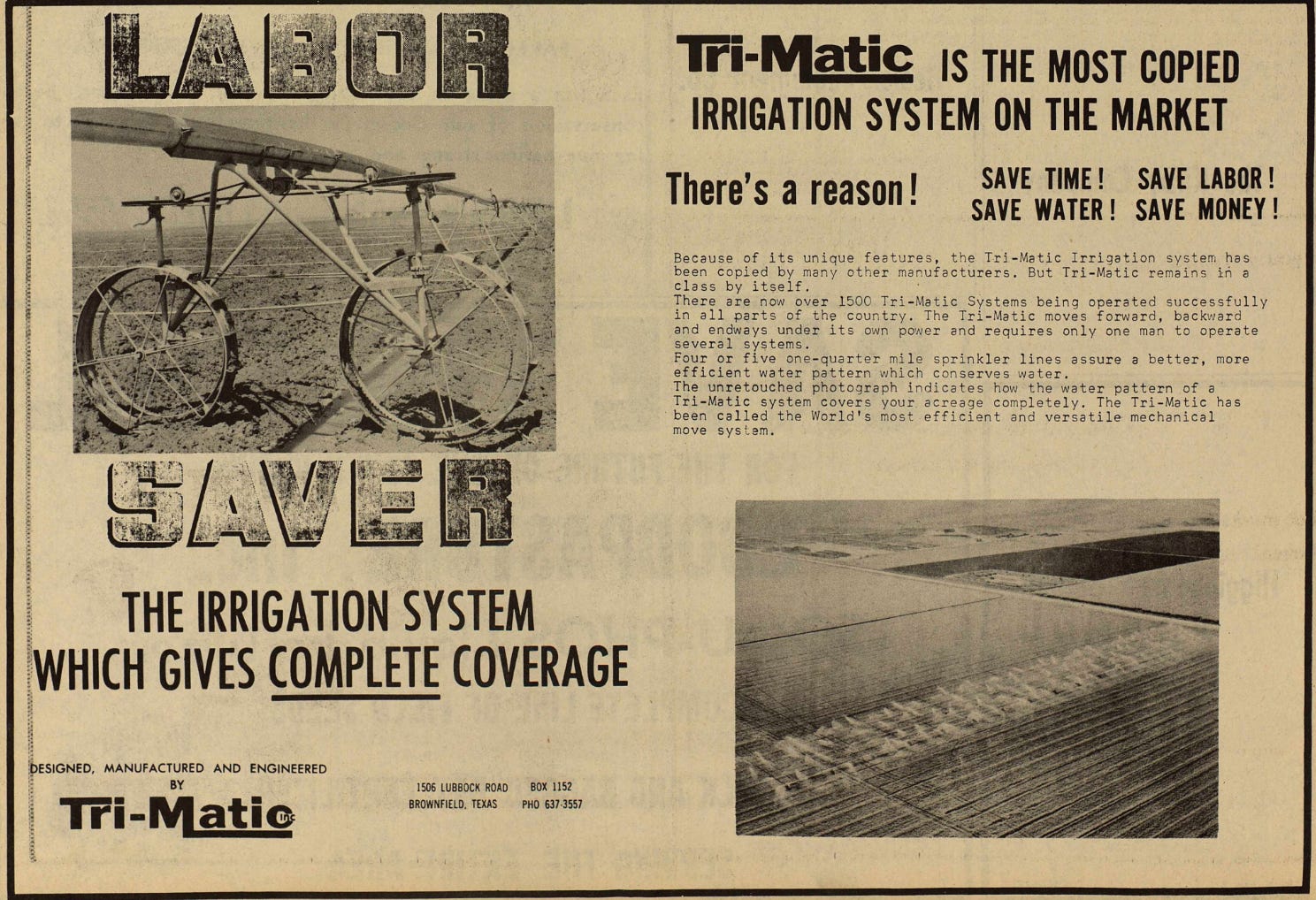
By 1961, tailwater pits were catching runoff and pumping it back onto the field. Irrigation had created the runoff, and then another pumping system recaptured it. Soon, side-roll sprinklers and Tri-Matics started moving the equipment so farmers didn’t have to. Then came the center pivot. Frank Zybach patented it in the late 1940s, and it reached the Texas High Plains in the late 1960s, powered by water pressure at first, then by electric drives by the early 1970s. One machine could water a quarter section nearly unattended. Concrete gathering tanks were adopted when individual wells started to weaken, pooling several wells into a usable flow and operating pressure needed for these systems.
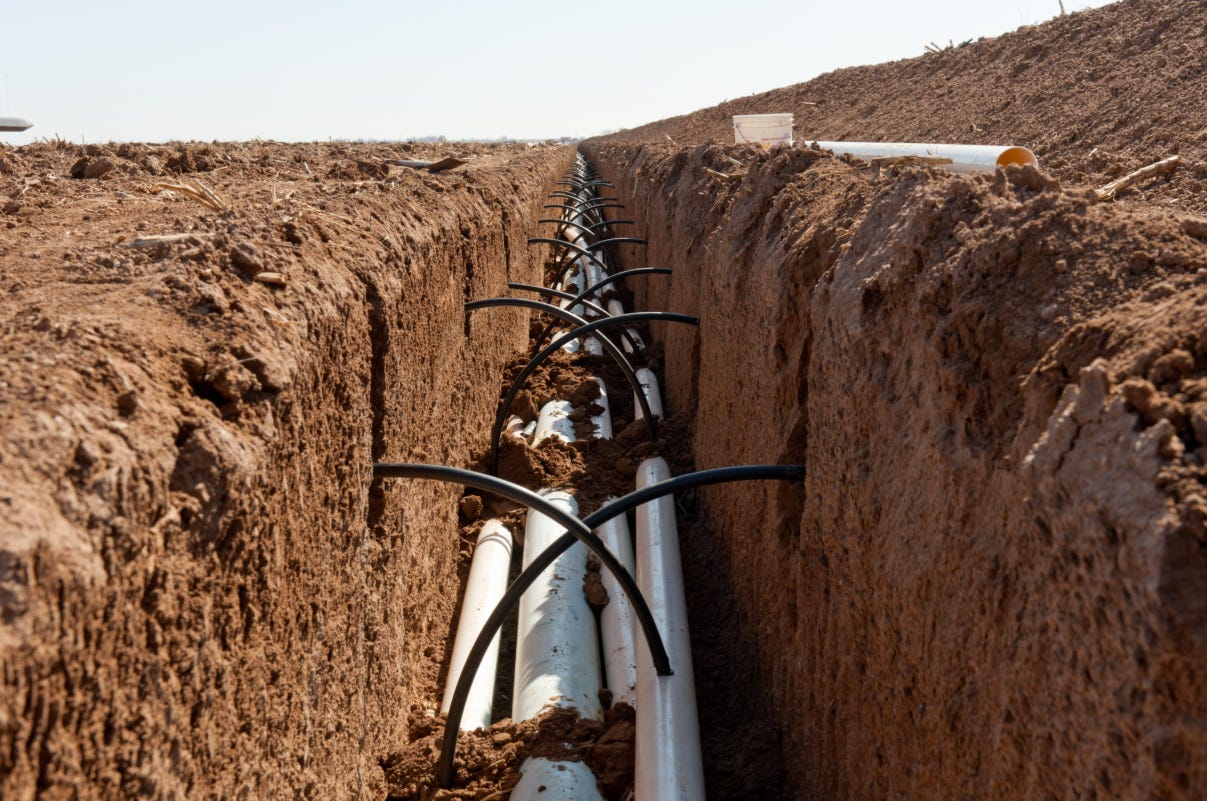
In the late 1970s, PVC pipe entered the picture as Western Ag Sales began producing it in Plainview in 1977. PVC gated pipe and poly pipe followed, with each getting cheaper and lighter than the one before. Around 1978, Texas High Plains researchers developed LEPA, or Low Energy Precision Application, in response to falling water levels and the energy shocks of that decade. The technology put water near the soil at low pressure under a moving pivot. Drip came next, with the first modern research in Lubbock by 1988 and commercial systems in several neighboring counties by the mid-1990s.
Satellites were mapping irrigated land by 1980. Soil moisture probes spread through the 2000s. Variable frequency drives let an electric well run at a speed that matched its output, and cost-share programs were putting them on dozens of High Plains wells by the mid-2010s. In 2018-19, the High Plains Water District’s AIM program put telemetry on 209 systems across 25,427 acres, so farmers could monitor and control irrigation from a phone.

There’s no incentive to keep the water in the ground
Each technology removed a constraint that made getting water out of the ground and to the crop expensive. None of them changed what the farmer paid for the water itself. Under Texas law, what a landowner pays is the cost of pumping water, not for the water itself. Furthermore, well-intentioned federal policy has also been part of that signal. Through the Environmental Policy Incentives Program (EQIP), USDA today helps pay for pivots, drip systems, pipelines, and irrigation water management technology on the High Plains, just as it has with every technological improvement beginning with concrete pipe in 1944. With a goal of conservation, the programs deliver the efficiency they pay for. But the payments are tied to what gets installed, not to water staying in the ground. When the price signal for water doesn’t change as it depletes, there’s no incentive to stop depleting.
Irrigated area on the Texas High Plains peaked at about 6.0 million acres in 1974, then fell to about 4.0 million by 1989 as things like energy prices and flat commodity prices made pumping harder to justify. But it eventually came back. By 2000, about 4.6 million acres were irrigated, and pumping had jumped from roughly 4.5 million acre-feet to 6.5 million. Over the same period, sprinklers went from 44% of irrigated area to 72%. Researchers attribute much of the rebound to easing drought conditions, so I’m not claiming technology alone caused it.
Better equipment kept wells producing and fields profitable that would have been abandoned sooner. This was a great outcome for the farmer. Efficiency extended irrigation’s life, but the aquifer paid for the extension. By the early 2000s, more than half of the original saturated thickness was already gone across most of the southwestern Texas Panhandle.
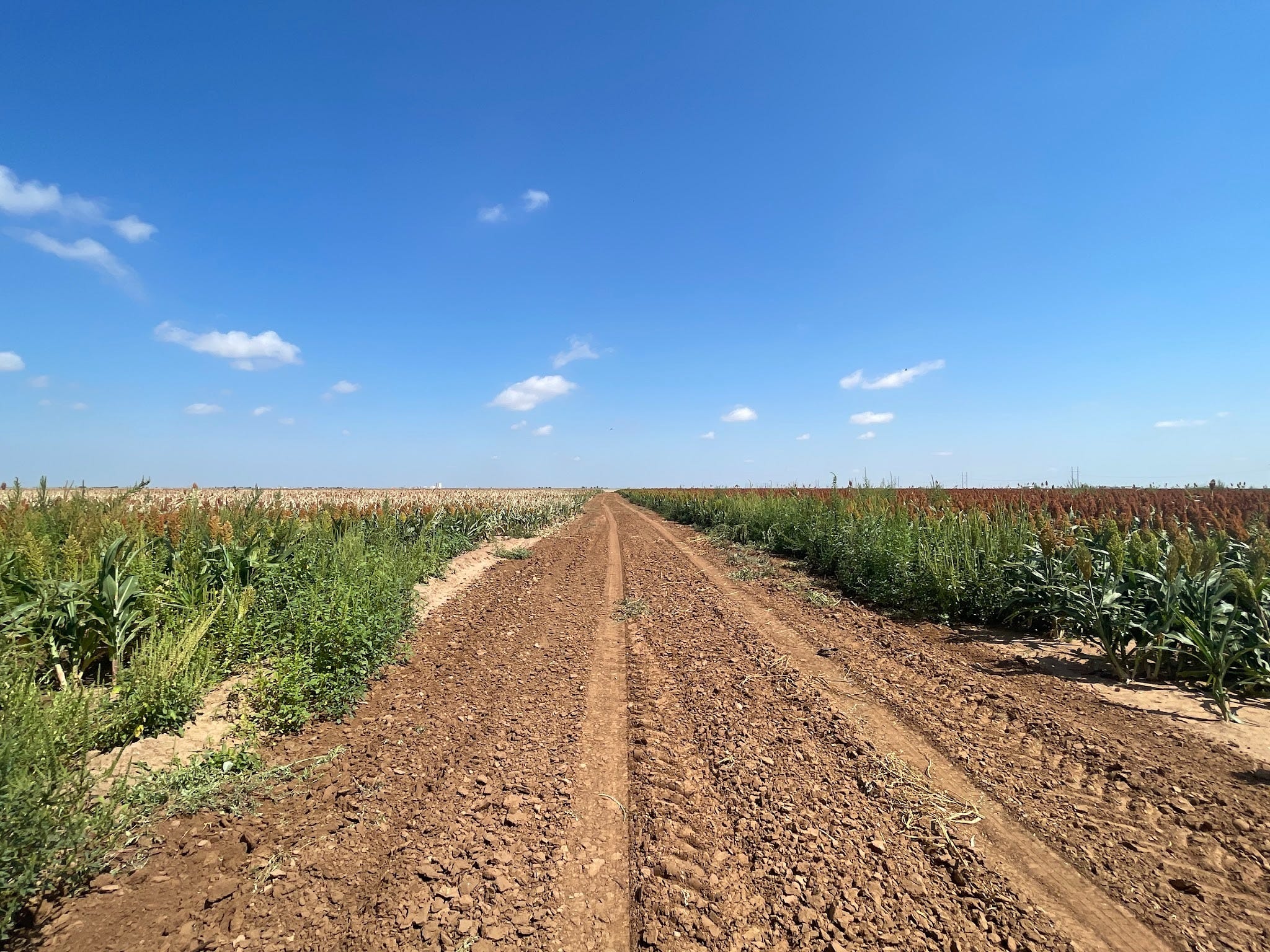
None of this is a story about bad decisions. A farmer who adopts a better system is responding to the economic signal in front of him. Water is cheap relative to what a crop returns, the equipment gets better every few years, and the next acre-inch of water will earn more than it costs to pump. Anyone in that position, with a loan to pay and a family depending on the crop, would do the same.
Systems that keep more water in the ground
The scary truth is that if we want to continue to raise our families on the land above the Ogallala, we have to figure out how to extend the life of the aquifer rather than simply use the water it provides more effectively. If better equipment doesn’t do that, what does?
Northwest Kansas has the best answer I’ve found. In 2012, farmers in Sheridan County proposed a plan to cap their own irrigation, and once the state approved it, it became law. The plan, called a Local Enhanced Management Area, or LEMA, set a five-year allocation of 55 inches, roughly 20 percent below their long-term average use. Nobody knew what it would do to their profits.
In its first decade, the area exceeded its water-use reduction goals and cut the rate of aquifer depletion by more than half, without significantly affecting net income. The savings came from a modest 2 to 5 percent drop in irrigated area plus better management, including higher water-use efficiency and a shift toward lower-demand crops like sorghum. The limit came first. Then technology and management made living within the limit affordable. It’s the Jevons Paradox in reverse.
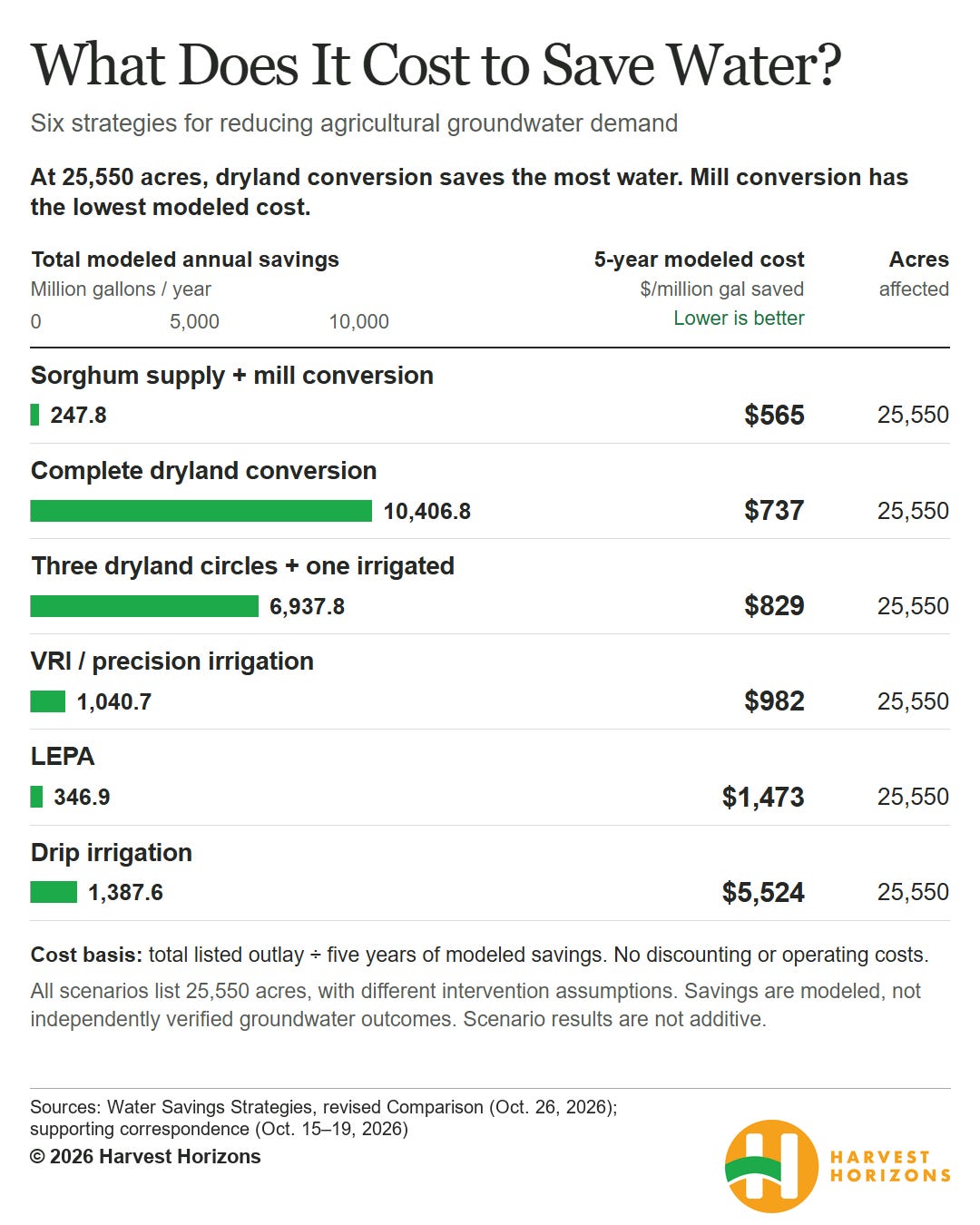
That’s what I mean by a system. A sensor, a VFD panel or drip are tools. A system ties the tool to a decision and a boundary. It has three parts:
A water budget. A number the farm manages to, whether it’s a regulatory allocation like Kansas or a voluntary commitment backed by a lender or a buyer. Without one, efficiency has nowhere to go but back into production.
Data that drives decisions. Moisture probes, satellite imagery, and well telemetry only save water if they change when and how much a farmer irrigates. Their job is to make managing to a budget possible, not just to produce dashboards.
A reason to leave the water in the ground. If the farmer, the lender, and the buyer can’t all see value in an unpumped acre-inch, the economic signal stays the same. Kansas answered that partly through law. In Texas, where the right of capture governs, the answer may have to come from somewhere else, such as contracts, lending terms, or supply chain commitments.
None of this means we stop buying better equipment. We’ll keep needing it, because the farms that stay irrigated will be the ones that can do more with less. But the technology list I walked through earlier is a history of making water easier to use. The next chapter has to be about deciding how much we use.
Recent Articles
How to take the heat out of disagreement in Kansas Farmer
Sorghum industry bets on research, collaboration to unlock crop’s potential in Kansas Farmer
Water conservation can’t work without economic viability in Kansas Farmer
If you haven’t already, check out our previous newsletters.
About Serō Ag Strategies
At Serō Ag Strategies, we bridge farmers and supply chain partners by transforming complex agricultural data and policy into actionable insights. We also work to create and grow markets for commodity crops by aligning production with evolving demand, policy shifts, and sustainability goals. Combining multinational expertise with the personal touch of boutique consulting, we specialize in economic and sustainability analysis that drives strategic innovation.
Click here to learn more about Serō Ag Strategies.


Great article. You’re exactly right. Advances in technology have made it economical to pump smaller wells that wouldn’t have been worth operating in the 1970s and 1980s.
I would add that it’s not just the cost side of the equation, but the revenue side as well. Technologies like no-till farming and more efficient irrigation have allowed farmers to produce more with less water, increasing the value of every acre-inch and the incentive to pump it. The disconnect between the value of that water and the cost of extracting it leaves virtually no economic incentive to keep it in the ground.
And therein lies the irony of well-intentioned government policy. Farmers already have strong economic incentives to adopt these technologies. Progressive producers were making those investments with their own money long before government incentives came along. Yet I watched EQIP dollars go toward converting flood irrigation to pivots years after those early adopters had already paid for the same improvements themselves. In the end, we subsidized investments the economics were already driving, all in the name of conserving water.
I suppose the one thing we’ve managed to conserve is the good intentions.